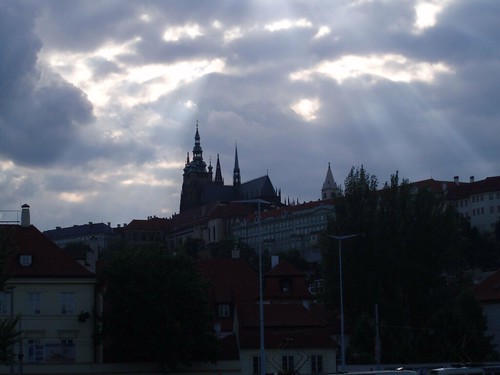
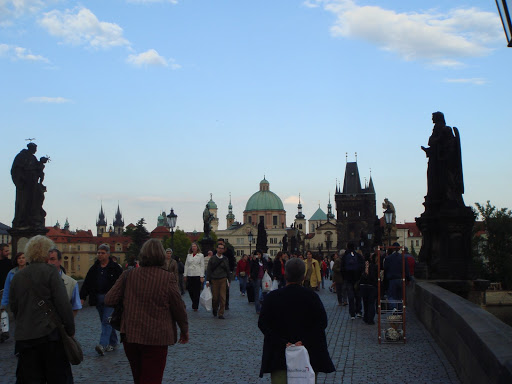
 Prague Castle was first on our list. It is the focal part of the city, centered on a hilltop that you can see from just about any neighborhood. To get there, you have to cross Charles Bridge, which is probably one of the most photographed sites in Prague. It is a long pedestrian bridge that crosses the river and is decorated with a variety of statues, mostly of saints and Jesus. It's difficult to admire the statues during the day, however, with all the tourists and street vendors. But we still enjoyed strolling across it and people-watching.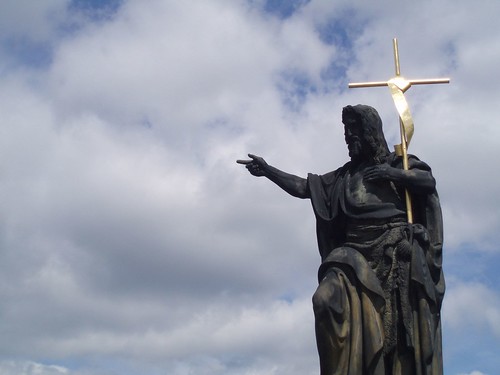
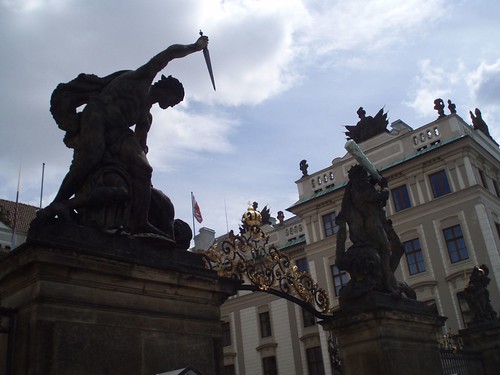 Outside the castle gates, which were guarded by statues of giants fighting, we stopped to listen to a small group of musicians who were featured in our guidebook. Vitus Cathedral, located on the castle grounds, was definitely the highlight of the tour. It offered your standard cathedral fair, but one stained glass window was designed by Czech artist Alfons Mucha and depicted historical scenes of the Czech Republic. Mucha is one of the most renowned Art Nouveau artists, and the three of us love his work. We probably bought more Mucha prints during our stay than any other type of souvenir.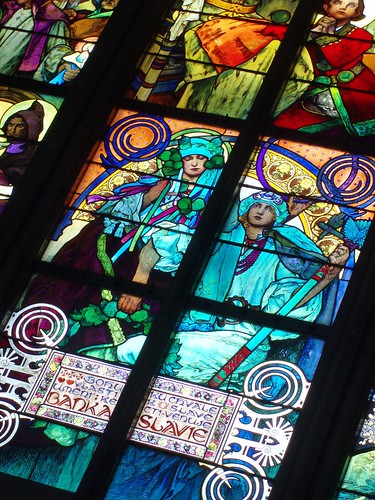
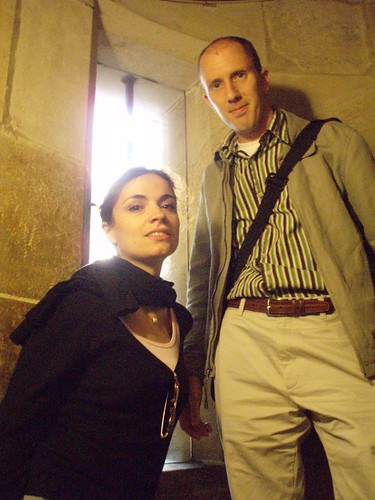 Claustrophobes, beware. But it was well worth it. At the top was an open-air balcony overlooking the city and offering plenty of scenic views. Plus we got a great photo of the angel Alexia (and some dude).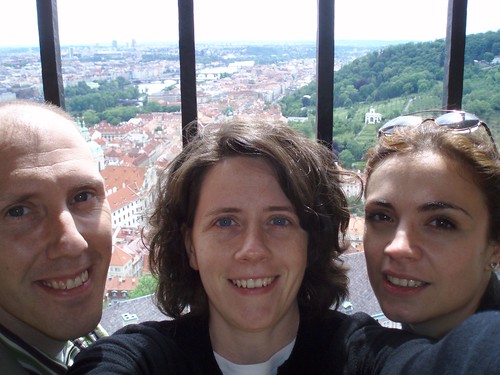
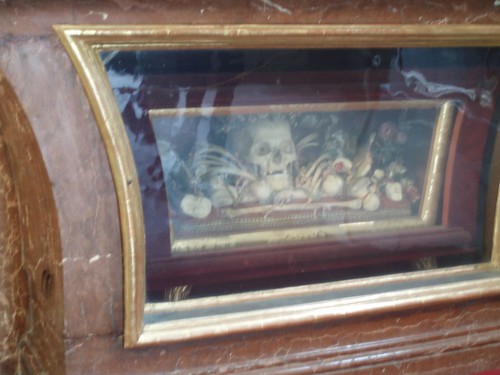
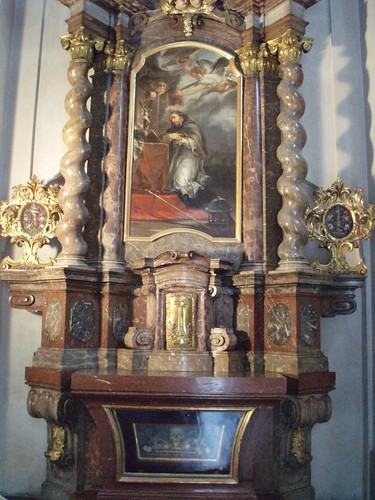 Prague castle itself was not all that exciting. Very minimalist, and if you're interested in knowing more about it than that I'll loan you our guidebook. St. George Basilica, located next to the castle, was sad to see just because it looked like it used to have beautiful murals on its ceilings but they were not well-preserved over the years. However, it did have an impressive (and unlabeled) shrine to someone, whose bones I suppose were the ones displayed in the glass case.
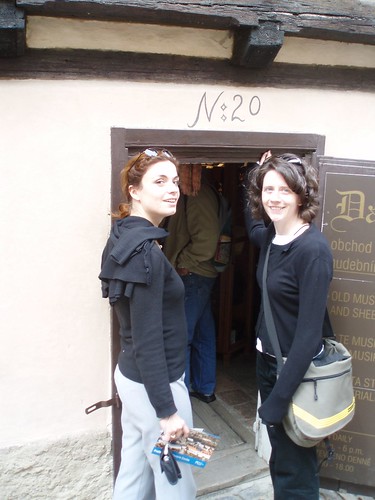 made our way to a tower where prisoners were regularly tortured. A lot of interesting devices were on display, so of course David and I were fascinated. Alexia refused to venture inside, however, stating that she "did not like torture."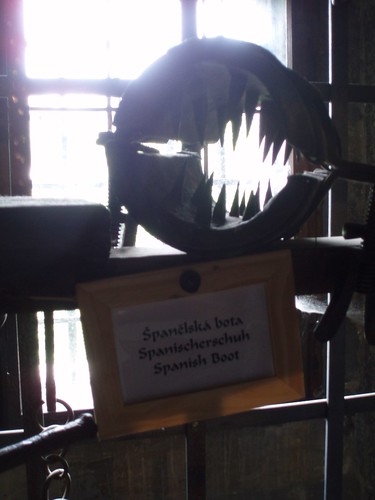
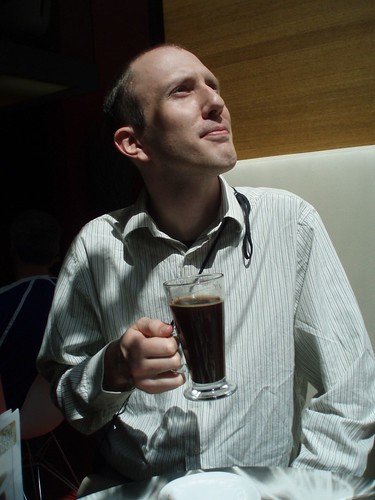
The next day was Museum Day. We of course made our way first to the Mucha Museum. It was small but very nice as well as informative. The gift shop was disappointingly sparse, but fortunately a ton of souvenir shops carried copies of his prints. Afterward we enjoyed a coffee break at Cafe Emporio - a very eclectic little cafe with broken egg shells decorating one wall. 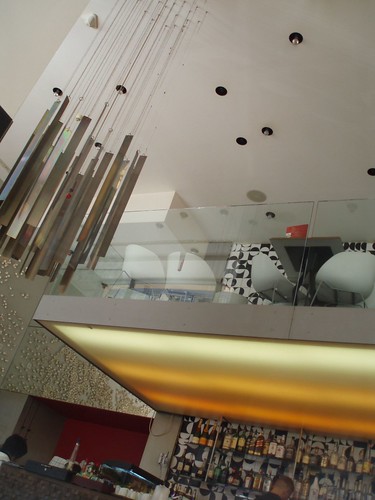
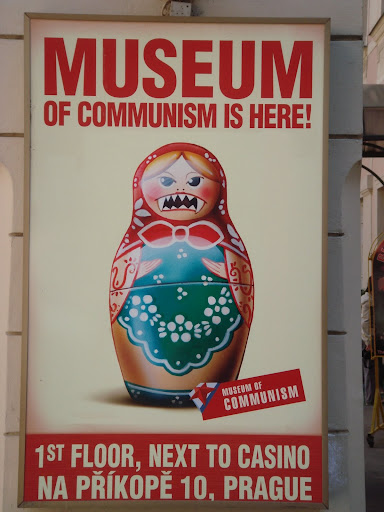 icans as evil oppressors.
 We wrapped up our museum tour in the Jewish Quarter, which 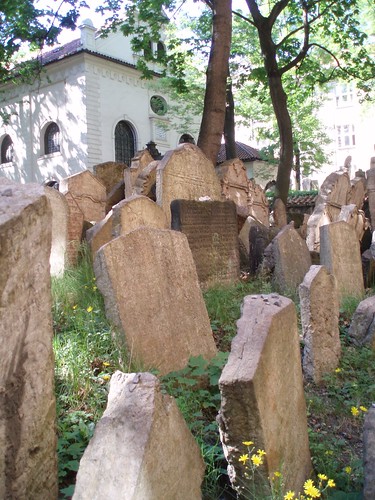 featured several synagogues and a cemetery. In the cemetery, people were buried on top of one another because of limited space, which is why the headstones were so crammed together. It was a very solemn and impressive area. Here and there we came across walls where people left tiny scraps of paper with prayers written on them in the nooks and crannies.
 We ate lunch on a patio of a nearby restaurant, where we sat next to a fat kid playing a handheld video game. Glad to see he was enjoying his cultural experience. David and I each ordered a personal pizza - which ended up being way too much food. David, being the good guy he is, decided to give our leftovers to a young homeless man with a dog and very shaky hands. He showed no reluctance to accept it.
 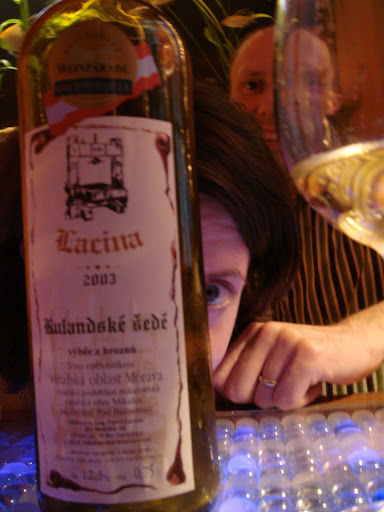 For our last dinner in town, David made reservations at a very cool vegetarian restaurant called Clear Head. The tables were decorated with glass beads and illuminated with a blue light. We had a bottle of Moravian wine, which was delicious. I enjoyed a dish made of potatoes au gratin covered in spinach and goat cheese. Alexia had some kind of veggie burrito, and David got a mushroom pasta. It was all very, very good.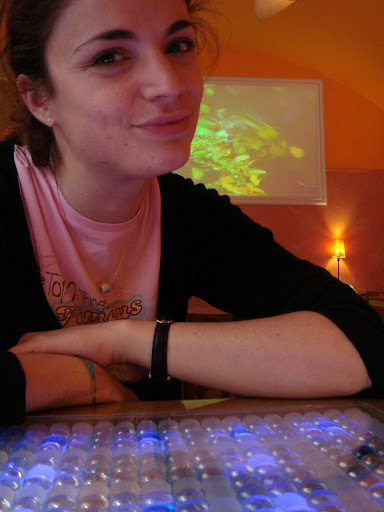
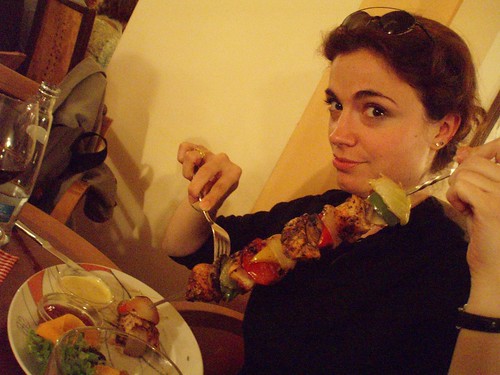
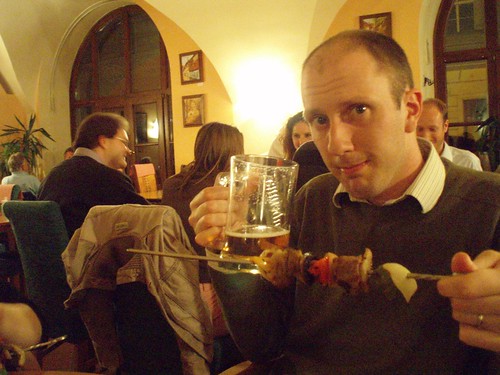
 rague. But get a reservation. We did not have one, yet they were still able to seat us because we arrived early in the evening. But we were only allowed 45 minutes to eat and then get out. The ambiance was awesome - like eating in a very chic wine cellar. The food was even better. Thanks to Mike Gruss for recommending! Original Needle House we came across by accident while looking for a good place to eat. Their specialty was very generous shishkabobs (below). It didn't take us long to learn about a cultural phenomenon in regards to Czech dining. The wait staff does not take it upon themselves to check on you to see if you need anything - a napkin, a drink refill, your check, etc. You pretty much have to flag them down or get up and ask them for whatever it is you may need. We toyed with the idea of never hailing a waiter at Original Needle House, just to see if they'd turn off the lights and go home without ever bringing us our bill.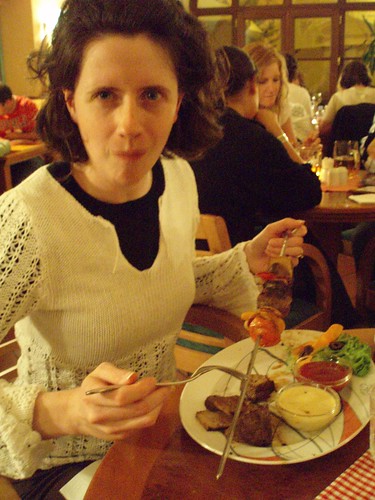
That, my friends, was Prague. One entry left - our last day in Paris.

No comments:
Post a Comment